

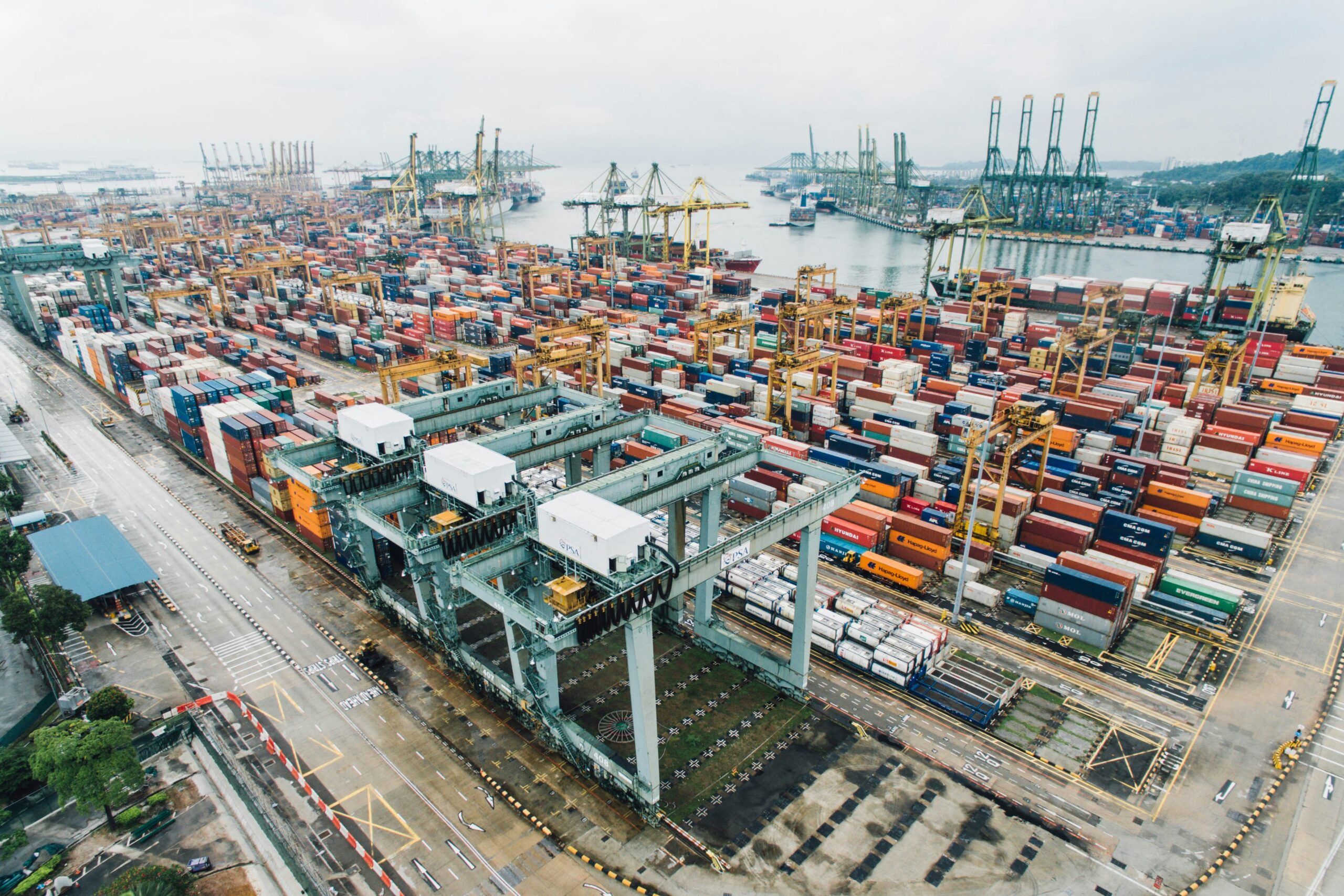
Africa Is the Future: The Next Industrial Revolution is underway
Africa is entering a decisive decade. Demographics, trade integration, digitisation and infrastructure are converging to create the conditions for the next industrial revolution – one built on power, logistics, data and commodities.
For most of modern history, the world has treated Africa as a source of raw materials, humanitarian headlines and “potential” that never quite arrives and misconceptions shaped by headlines. That narrative is outdated – for serious investors it is short-sighted … and it’s becoming expensive.
Because the truth is simple: Africa is not the last frontier. It is the worlds’ next engine.
Not someday. Now.
What we are watching – quietly but unmistakably – is the early formation of a new industrial wave and by understanding what actually drives industrial revolutions (not slogans, but the real mechanics), Africa’s trajectory becomes obvious.
Industrial revolutions don’t begin with shiny consumer brands. They begin with fundamentals:
- People (demographics and skills)
- Power (generation, transmission, reliability)
- Logistics (ports, roads, rail, warehousing, trade rules)
- Capital (bankability, risk mitigation, credible partners)
- Information (data, connectivity, digitisation, trust systems)
- Industry (processing, manufacturing, supply chains)
Africa is now assembling these building blocks – country by country, corridor by corridor – and with the right backing, technology and will they are doing so with accelerating speed.
China’s rise didn’t happen in five years – it compounded across decades. The reform era began in 1978, China joined the WTO in 2001 and by 2010 it had overtaken Japan to become the world’s second-largest economy. The lesson for Africa isn’t that change is slow – it’s that once fundamentals stack, growth becomes exponential.
As Africa enters its compounding decade with tailwinds China didn’t have at the start: an outsized share of the world’s critical minerals that sit at the heart of batteries, electrification and advanced manufacturing, plus arguably the strongest solar endowment on the planet – the raw ingredients for cheaper power and a modern industrial base. Add to that the ability to leapfrog with digital rails and in an age where AI compresses learning curves and operational capability the transition can move at light speed.
The truth is simple – Africa is the future – VPK has been working on this continent for more than a decade and with three offices already in place there we are at the tip of the spear of progression.
The Demographic Reality: The World’s Growth Is Becoming African
The fastest way to understand where the world is going is to look at where the people are.
By 2050, Africa’s population is projected to reach around 2.5 billion – more than a quarter of the world’s population. That isn’t a footnote, it is destiny. Demographics are not a guarantee of prosperity – but they are a guarantee of relevance. They determine:
- where labour pools form
- where consumer markets expand
- where housing and infrastructure must be built
- where new cities and industries are forced into existence
And unlike ageing regions that are now trying to “manage decline,” much of Africa is still in the phase of building – which is the most investable phase of any economy.
The global competition of the next 30 years will be about one thing: who partners early and intelligently with Africa’s growth. VPK is here to guide you.
Trade Is the Missing Ingredient … and It’s Arriving
People alone don’t create industrial revolutions. Integration does.
The African Continental Free Trade Area (AfCFTA) is designed to create a single market across Africa – reducing friction, expanding addressable markets and improving the logic of building factories and value chains inside the continent rather than exporting raw inputs.
No one should pretend implementation is frictionless. But here’s what matters for investors:
- Africa is moving from fragmented micro-markets toward scale
- Scale attracts industry
- Industry attracts infrastructure capital
- Infrastructure unlocks compounding growth
That loop is the engine of industrialisation.
The Next Industrial Revolution Will Be Hybrid: Physical Infrastructure + Digital Infrastructure
There’s a misconception that Africa must follow the same path as China or the West: decades of heavy manufacturing first, digitisation later.
That is not what is happening.
Africa is building two revolutions at the same time:
- The physical build-out: energy, ports, roads, rail, housing, special economic zones, processing capacity.
- The digital layer: connectivity, data centres, payments, identity, digitised public services and – now – AI-enabled operations.
This matters because it changes what becomes investable and how quickly value can appear through the transition from concept to creation.
The world’s next industrial wave will not be purely “smokestacks.” It will be:
- power + data (data is the new oil in Africa in our opinion)
- logistics + software
- commodities + processing
- workforce + AI tooling
That hybrid model is exactly where modern capital gets its best risk-adjusted returns: hard assets with digital leverage. Crucially Africa largely has a “clean slate” which despite its evident downsides also means that creation of systems and strategies can learn from the mistakes of the West. British NHS anyone?
Commodities Are Not the End of the Story. They’re the Start.
Africa’s commodity position is widely understood. What’s misunderstood is what comes next.
Commodities are not merely exports. They are the foundation of:
- industrial clusters
- domestic value-add
- regional processing hubs
- strategic supply chain control
The opportunity isn’t simply to “trade” commodities. The opportunity is to industrialise around them:
- processing and refining
- local manufacturing inputs
- downstream production
- logistics and storage
- verified supply chains and compliance rails
This is how countries move from price takers to price makers. And this is where sophisticated partners matter – because the projects that unlock value-add are rarely “simple.” They require:
- bankable structures
- credible counterparties
- government alignment
- delivery capability
- and risk mitigation that international capital can live with
As proven in Ghana this year through the GoldBod inception and resulting currency improvements – the strongest FX gain globally in 2025 – African countries are beginning to utilise minerals strategically to improve their overall standing and bankability.
The Investment Thesis the Market Keeps Missing: Africa’s “Confidence Gap” Is Closing
For decades, the biggest barrier to African investment wasn’t opportunity. It was confidence:
- confusion about counterparties
- lack of bankable structures
- weak project preparation
- mismatched time horizons
- and reputational fear
That gap is now narrowing – fast – because a new class of projects is being built with investor realities in mind: clear revenue models, contracted offtake, blended finance, PPP frameworks, development finance participation and modern procurement expectations.
In parallel, global investors are now forced to look harder at:
- stagnating growth in mature markets
- geopolitical supply chain risk
- and the scarcity of genuine expansion opportunities
The result is predictable: capital will follow growth and necessity, not nostalgia. And Africa has both. VPK as a Frontier Market Entry specialist can help guide you through the journey, make safe introductions and even contractually engage with you using its Western sister companies to de-risk where you are uncertain.
The Quiet Revolution: Africa as the Next Global Operations Hub
Now we get to the part that most people still underestimate.
When people hear “outsourcing,” they think of India – built on a mix of time zone offsets, scale and English-language service delivery.
But Africa has a structural advantage that is increasingly obvious for European and UK-aligned operations:
- near-aligned time zones for real-time collaboration
- strong English and French language markets across multiple countries
- much softer accent barrier
- fast-improving connectivity and digital infrastructure
- and a young workforce that can be trained at scale
You don’t need overnight handovers. You don’t need midnight management calls. You can run operational support in the same working day. Industry bodies and studies increasingly point to Africa’s competitiveness in customer experience (CX), business process outsourcing (BPO) and IT-enabled services – supported by time zone alignment and growing digital infrastructure.
There’s also a second-order effect: AI doesn’t remove outsourcing – it upgrades it. Research backed by the Mastercard Foundation highlights that automation will reshape tasks, which increases the premium on AI upskilling and higher-value service delivery in Africa’s outsourcing sector. (mastercardfdn.org)
This is the next wave: not just call centres but digitally enabled operations – finance ops, compliance ops, customer success, procurement support, analytics – done in-market time zones with real-time management.
That is not theory. It is already moving.
“But Isn’t Africa Too Hard?” The Real Question Is: Hard Compared to What?
Every major growth market was “too hard” before it became obvious.
China was “too hard.”
India was “too hard.”
Vietnam was “too hard.”
The Gulf was “too hard.”
Growth markets are always hard – until the returns become undeniable.
The investor advantage is not in pretending risk doesn’t exist. It’s in knowing how to price it, structure it and mitigate it. VPK can be immense assistance here.
That is why the winners in Africa won’t be tourists. They’ll be partners, just like us, with :
- with deep local networks
- with disciplined project selection
- with credible delivery capability
- and with structures built for international capital standards
What This Means for Investors: The Next Decade Is a Positioning Game
Africa’s next industrial period won’t reward passive optimism. It will reward positioning.
The best opportunities will sit at the intersections:
- power + industry
- logistics + trade corridors
- data centres + digitisation
- commodity flows + value-add processing
- government priorities + private execution
- AI + workforce enablement
And the best returns will go to those who enter early with the correct scaffolding:
- compliant structures
- clear governance
- credible partners
- and a long-term view
This is not a “quick flip” story. This is a generational compounding story.
A Note on “Africa, the Next India?”
Next week, we’ll tackle a provocative idea: is Africa positioned to become the next India – especially for global services and outsourcing?
Not because Africa should imitate India, but because:
- the world is re-optimising supply chains and operations
- time zone alignment matters more than most executives admit
- and talent markets are being re-priced globally
If your teams are in the UK or Europe, the strategic logic of Africa-based service delivery becomes compelling – fast.
We’ll break down:
- where the strongest outsourcing hubs are emerging
- why time zones and language create structural advantage
- and how digital infrastructure (including data centres) changes the scale of what can be delivered
Closing: The Future Doesn’t Ask Permission
There are moments in history where you can feel the direction of travel before it becomes consensus.
Africa is in that moment now.
The question is not whether Africa will rise. The question is who will help build it – and who will still be watching from the sidelines when the real compounding begins.
At VPK International, our thesis is straightforward:
Africa is not a charity case. It is the most strategic growth platform of the 21st century.
And the next industrial revolution won’t be announced with a headline. It will arrive quietly – through ports, power, fibre, data, commodities and the relentless mathematics of demographics. If you’re assessing Africa and want an execution partner on the ground, speak to us, let us ease your entry into this incredible continent.